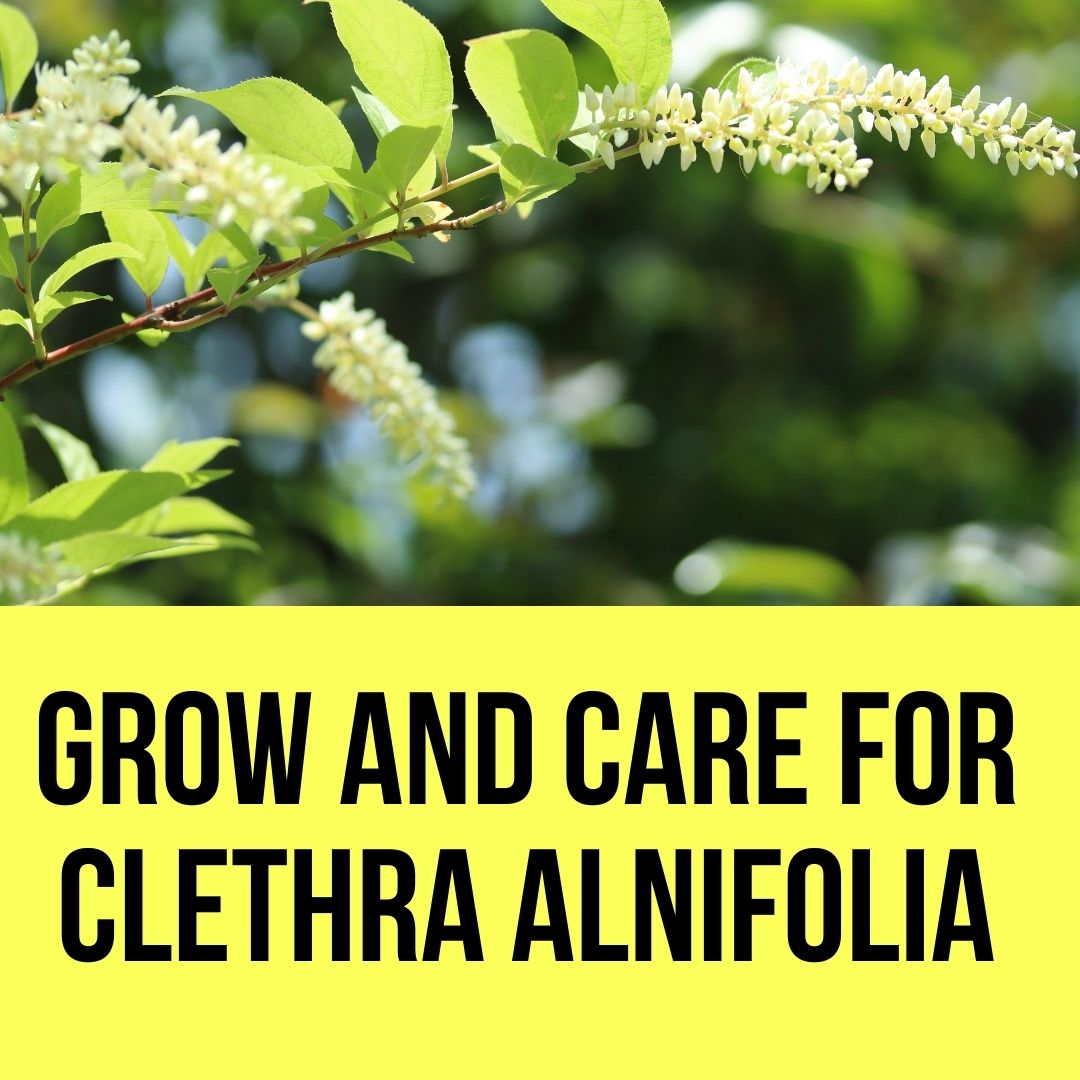
How To Grow Clethra Alnifolia: Edible, Rubi Space, Pink Spire, Rosea
Clethra has presented evergreen ligneous plants, and it belongs to the Kletrovye family. Such a culture prefers to grow in nature on the coast of swamps and streams. The sort unites about 80 types. A part of types enjoys popularity at gardeners.
Plant Overview
- Common Names: Summersweet, Sweet Pepperbush
- Height/Spread: 5–7 ft tall, 6–8 ft wide
- Zones: USDA 3–9 (cold hardy)
- Bloom Time: July–August
- Features: Fragrant flowers, yellow fall foliage, peppercorn‑like seed capsules
Growing Conditions
- Light: Partial shade to full sun (blooms even in heavy shade).
- Soil: Moist to wet, slightly acidic (pH 4.5–6.5).
- Water: Prefers consistently moist soil; drought can stunt growth.
- Temperature: Hardy in cold climates, tolerates salt spray.
Planting & Care Steps
- Location: Choose a damp, shady corner or rain garden.
- Soil Prep: Amend with compost for fertility and drainage.
- Planting: Dig a hole 2–4× wider than root ball, place shrub level with soil surface, water thoroughly.
- Mulching: Apply 2–3 inches to retain moisture and suppress weeds.
- Watering: Deep water during drought; avoid letting soil dry out.
- Pruning: Cut back in spring on new growth; remove old or weak branches.
- Fertilizer: Light feeding with balanced fertilizer in spring if growth is slow.
Features of Clethra Alnifolia
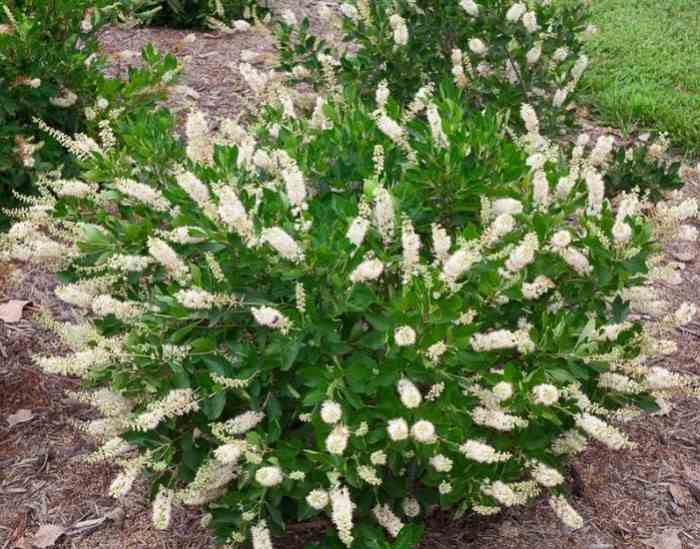
Clethra is presented by trees and bushes which possess the superficial system of roots with a large number of branches and several rod backs. On the surface of stalks, there is a hairy omission. Integral one after another sheet plates appear only in the last days of May, they possess a pilchard edge.
Blossoming begins in the last summer or first autumn weeks. Top inflorescences can have the panicled or clustery form, they consist of both sexes of fragrant flowers of a white color which are externally very similar to bird cherry flowers. The fruit represents a box.
Though in a sort there are also strongly tall types, however among gardeners tiny forms, in height the reaching no more than 100 cm enjoy popularity. Such plant perfectly is suitable for the creation of a green hedge, and for the registration of rock gardens.
Cethra native – In what time to put?
For a Clethra it is necessary to choose the site from training, it is good – the humidified and sour soil which has to be sand-humus. And least of all nutritious and alkaline soil is suitable for its cultivation.
As for illumination, such plant prefers shaded places, as a last resort for it, it is possible to choose a site which from 12 to 16 h, is protected from direct beams of the sun. Disembarkation is recommended to be carried out on the open ground in May.
Rules of landing
Prepare a landing hole which in the diameter and in-depth has to reach 0.5 m, at its bottom make a drainage layer about 15 centimeters thick. Place a sapling in a ditch and after its backs are straightened, fill up a hole in advance and prepared a soil mix which part sand, the forest coniferous earth, and peat (1:1:3) have to be.
It is necessary to pour a small amount of sawdust into a ready soil mix, and 80 grams are gray. Landed to a plant it is necessary to water with the acetic solution (on 1 bucket of water of 100 mg of vinegar (6%)) after the liquid is absorbed, the surface of a near a trunk circle is a little condensed and the bush is watered again.
Leaving for Clethra in a garden
Successfully to grow up a Clethra alnifolia on the garden site, it should water, feed up, weed, be a pinch, cut off in due time, and also loosen a surface a near a trunk circle, move away from young growth, to cover for the winter, and if necessary to protect from mean insects and diseases. Considerably to reduce the number of weddings, loosening, and waterings, the surface of a near a trunk circle is recommended to be filled up with a mulch layer (peat, sawdust, or spill).
Cutting
The forming cutting can be carried out only in the autumn time when the bush fades. The matter is that at such plant of an inflorescence are formed on the draws which grew in the current season.
And sanitary cutting can be carried out both in the spring (prior to the beginning of a movement of juice), and in the fall, for this purpose delete injured, damaged by a disease or a frost of a branch and stalks and also those that grow incorrectly.
The shelter for the winter
At cultivation in middle latitudes, adult white alders can winter without shelter as they have rather high resistance to frosts. However, while the plant is young it needs shelter for the winter, for this purpose late fall the bush should be showered with fir twigs or dried foliage.
How to water
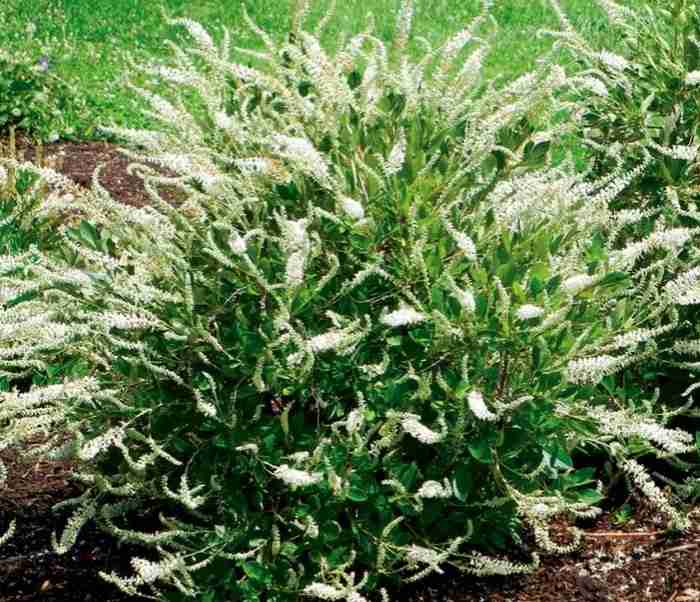
As this culture extremely negatively reacts to drought, it is necessary to water it plentifully and quite often. During the long drought period, waterings need to pay special attention, you watch that at this time soil in a near-stem circle was constantly moderately damp. It is necessary to water a bush with well-settled water which during the day heated up in the sun.
Watering is recommended to be carried out early in the morning or in the evening (not earlier than 16 h), at the same time try that droplets of water did not get on the surface of sheet plates.
Top-dressing
In a year of disembarkation, the very young sapling will not need top dressings. For more adult bushes shortly before an initial blossom it is recommended to feed up liquid complex mineral fertilizer.
Wreckers and diseases of a white alder
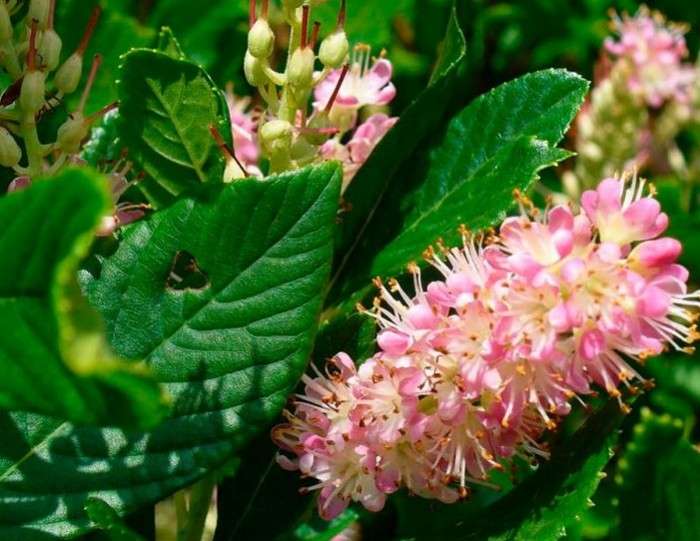
If a long time is observed excessively high air humidity and soil, then the probability that the bush will be struck with a phytophthora increase. In this case on its branches there are specks of a gray color, escapes droop and begin to dry up. All sick parts of a bush cut off, and carry out 3 processings with a break in 7 days, for this purpose use Fundazol or Topaz.
Still, the bush can ache with mealy dew, in this case on a surface of its elevated part speaks of a whitish color are formed. The struck plant should be sprayed with a solution of means which part copper or sulfur is, for example, Bayleton, Fundazol, Topaz, or Topsin. Also, such a plant can be struck with a viral disease which constitutes for it the greatest danger. The matter is that today such diseases are considered incurable.
At the struck white alder color of inflorescences and stalks changes. After the first symptoms of a disease are noticed, all sick parts of a bush should be cut out and destroyed. Sometimes see to a plant if symptoms of the disease appear again, then it should be taken from the earth and destroyed. Also on a white alder scale insects can lodge. This sucking insect exhausts vegetable juice from a bush. To get rid of it, the bush is sprayed with the solution of an insecticide or soap dissolved in water.
Types and grades with photo and names
As it was already mentioned above, gardeners cultivate only several types of Clethra.
Clethra alnifolia
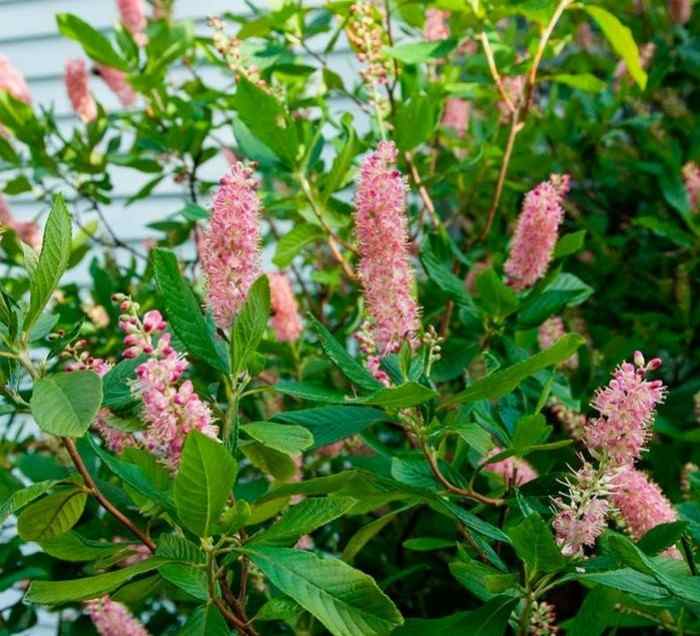
The homeland of such bush ― east part of North America. In height, it can reach about 200 cm. Blossoming begins in the last days of July. The length of direct inflorescences of a pyramidal form is about 15 centimeters, they consist of fragrant flowers. Obratnoyaytsevidny sheet plates have a rear edge, their length about 10 centimeters. At a young age in autumn time they become yellow.
The best grades:
- September Byyuti. The Blossoming of this late grade begins in September. The color of the inflorescences is white.
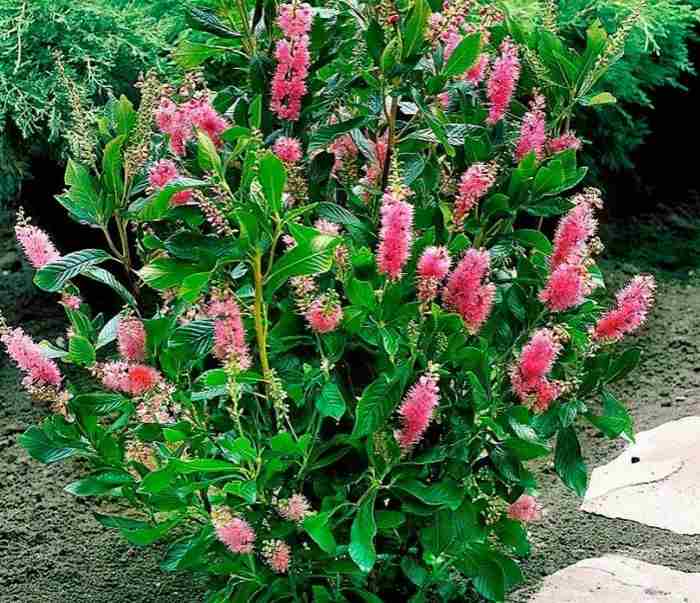
- Clethra Rozea. The color of the flowers lights pink.
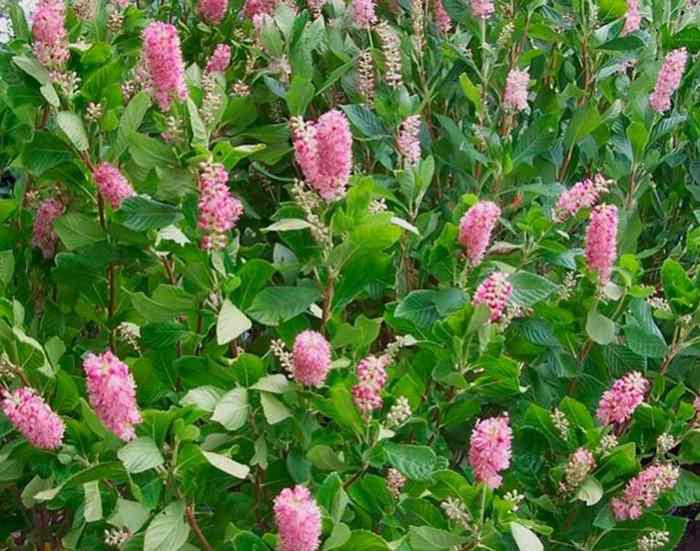
- Clethra Ruby Spays. Inflorescences consist of dark pink florets.
- Kril Kaliko. Poecilophyllous grade. Sikstin Kendlz and Himmingberd.
- Tiny grades. The height of bushes reaches no more than 100 cm of Pinikulat. Branches at a bush curved. In comparison with the main type of such plants, white inflorescences have a big size.
- Clethra Pink Spire. The color of the flowers is bright pink.
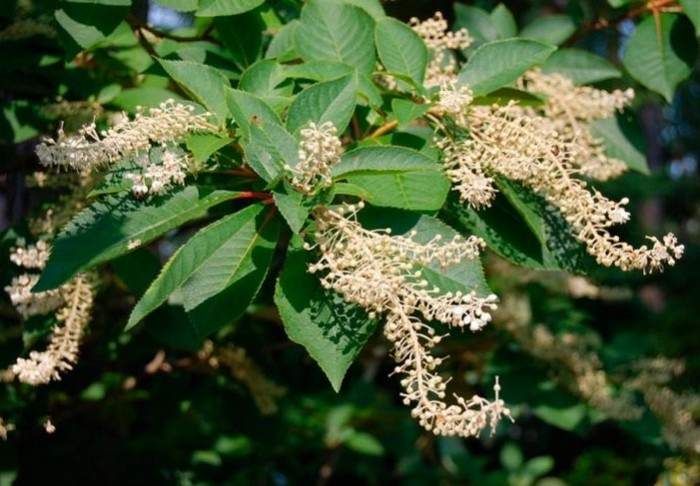
Clethra is from the Japanese islands. In height of a clear Japanese can reach up to 10 meters. The surface of a trunk is covered with the greenish-gray exfoliating bark on which surface there are brownish-yellow spots. ovoid bright green sheet plates have a length of 5-15 centimeters, on an edge, they are with sharp teeth. In autumn time they become yellow or red. Blossoming begins in June and comes to an end in September.
Length of pyramidal inflorescences about 15 centimeters are their part fragrant white flowers.
Clethra butterfly. In nature, this look can be met in the archipelago of Madeira. The height of a tree is about 300 centimeters, and the color of its dark brown. On the surface of very young escapes and leaves, there is an omission presented by a pile of a red color. Length oblong and ovoid or elongated ланцетных sheet plates about 12 centimeters, an edge at them pilchard. Brushes in length reach up to 15 centimeters, they consist of white flowers.
Planting & Care Steps
- Location: Choose a damp, shady corner or rain garden.
- Soil Prep: Amend with compost for fertility and drainage.
- Planting: Dig a hole 2–4× wider than root ball, place shrub level with soil surface, water thoroughly.
- Mulching: Apply 2–3 inches to retain moisture and suppress weeds.
- Watering: Deep water during drought; avoid letting soil dry out.
- Pruning: Cut back in spring on new growth; remove old or weak branches.
- Fertilizer: Light feeding with balanced fertilizer in spring if growth is slow.
Benefits
- Pollinator Magnet: Provides nectar for bees, butterflies, and hummingbirds late in the season.
- Wildlife Friendly: Non‑toxic to pets and humans.
- Seasonal Interest: Fragrant summer blooms + golden fall foliage.
Common Problems
- Underwatering: Leaves wilt, growth stunted.
- Overwatering: Root rot in poorly drained soil.
- Pests/Disease: Generally resistant, but occasional aphids or mildew in humid conditions.
FAQ’s
Q1. Does Clethra alnifolia need full sun? No, it blooms even in heavy shade, though growth is denser in sun.
Q2. Is it suitable for small gardens? Yes, but allow 6–8 ft spread; pruning helps manage size.
Q3. Can it grow in wet soil? Yes, it thrives in soggy areas where other shrubs fail.
Q4. When should I prune? In spring, since it blooms on new growth.
Q5. Is it safe for pets? Yes, it’s non‑toxic to dogs, cats, and humans.
Q6. How long does it live? It’s a perennial shrub, living decades with proper care.
Key Takeaway
Clethra alnifolia is a low‑maintenance, pollinator‑friendly shrub perfect for damp, shady spots. Plant it in acidic, moist soil, water regularly, and prune in spring for reliable summer blooms and vibrant fall color.